Proposal for a regulation to simplify regulations on medical devices and in vitro diagnostic devices
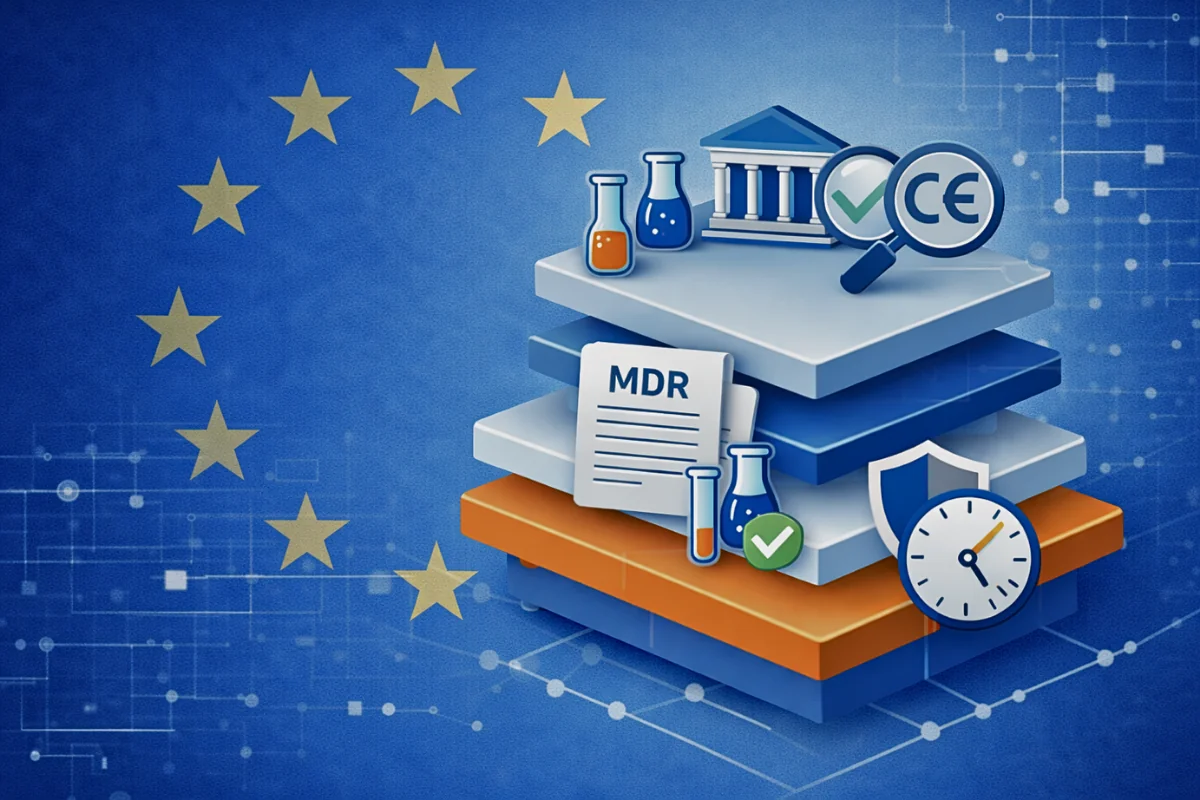
The European Commission has presented a legislative proposal introducing targeted amendments to the Medical Devices Regulation (MDR) and the In Vitro Diagnostic Medical Devices Regulation (IVDR). Following an extensive evaluation of the existing regulatory framework, the proposal addresses long-standing challenges related to regulatory complexity, administrative burden, certification capacity constraints, and barriers to innovation, all the while maintaining a high level of patient safety and public health protection.
For manufacturers, the proposal represents a structural evolution rather than deregulation. Core obligations relating to device safety, performance and compliance will remain unchanged. However, the manner in which compliance is demonstrated, reviewed and maintained is anticipated to become more risk-based, proportionate and digitally enabled.
Simplification and risk-based requirements
A central element of the proposal is the strengthened risk-based approach. The qualification and availability requirements for the Person Responsible for Regulatory Compliance (PRRC) have been eased, which will particularly benefit small and medium-sized enterprises. SMEs will no longer be required to ensure the permanent and continuous availability of an external PRRC, but only that the PRRC is available when needed.
Additionally, the proposal removes the current maximum five-year validity period for certificates. Rather than full re-certifications, Notified Bodies will conduct ongoing, proportionate reviews aligned with the risk profile of the device throughout the certificate’s validity. This will increase predictability and reduce unnecessary duplication of assessment efforts.
The requirements for clinical evidence are made more flexible. A broader range of data may now qualify as clinical data, reliance on equivalence data has been made easier, and non-animal methods, such as in-silico testing and other new approach methodologies, are now explicitly promoted. Furthermore, the proposal introduces the concept of well-established technology devices, enabling more proportionate requirements and replacing the rigid device lists currently embedded in the MDR.
Selected classification rules have been adjusted, which could result in certain devices, including reusable surgical instruments, specific software, and accessories to active implantable devices, being assigned to lower risk classes.
Reduction of administrative burden
Administrative requirements are reduced in several areas. The obligation to prepare Summary of Safety and (Clinical) Performance documents is limited to devices that are subject to systematic technical documentation assessment by a notified body. Separate validation of these summaries is no longer required.
Periodic Safety Update Reports (PSURs) will be reviewed within the scope of routine surveillance activities and must be updated less frequently. The vigilance reporting timeline for certain serious incidents has been extended from 15 to 30 days, provided that no death, serious deterioration in health, or public health threat is involved.
Certification and prior notification requirements for relabelling and repackaging activities have been removed, thereby reducing the regulatory burden for manufacturers and distributors.
Innovation, niche products and crisis mechanisms
To better support innovation and device availability, the proposal introduces more flexible provisions for in-house devices, including the possibility of transferring such devices between healthcare institutions when justified by patient safety or public health interests. For IVDs, the requirement that there be no equivalent industrial device available on the market is removed.
New regulatory pathways have been introduced for breakthrough and orphan devices. Once designated by an expert panel, these devices benefit from prioritised and rolling conformity assessments, as well as access to expert advice. Legacy orphan devices are covered by grandfathering provisions, which allow them to remain on the market under defined conditions.
Additionally, new derogation mechanisms enable the Commission and Member States to grant market access or exercise regulatory flexibility during public health emergencies. Regulatory sandboxes may also be set up to trial innovative technologies or regulatory approaches under supervision.
Efficiency, coordination and digitalisation
The proposal further improves the efficiency and coordination of Notified Bodies by introducing harmonised designation and oversight procedures, structured dialogue with manufacturers and an increased use of remote audits, while also reducing audit frequency where justified. For many device classes, technical documentation assessments will focus on representative devices rather than entire portfolios.
Digitalisation is being expanded significantly. Technical documentation, declarations of conformity and regulatory submissions may be fully digital. The requirements for UDI and EUDAMED are clarified, digital contact information becomes mandatory, and cybersecurity is explicitly integrated into general safety and performance requirements. Additional reporting obligations apply to cybersecurity incidents affecting connected devices.
Regulatory Assessment of the Proposed Amendments
Implementing the proposal in its current form could be an important step towards restoring the EU’s international competitiveness in the medical device and in vitro diagnostic (IVD) sector. The proposed changes would substantially impact the work and structure of Notified Bodies, significantly reducing regulatory costs for manufacturers.
From our perspective, these amendments are very welcome, as they promote a regulatory framework that is more proportionate, risk-based and pragmatic, allowing regulatory compliance to be driven by sound judgement and patient safety rather than unnecessary complexity.
How WQS supports manufacturers
WQS Management Consultants supports medical device and IVD manufacturers by helping them to assess regulatory impacts, optimise certification and portfolio strategies, align clinical and post-market activities, and implement compliant, future-proof solutions.
For more information on how the proposed MDR and IVDR amendments affect your organisation, contact us. Let´s get together for a structured impact assessment and practical implementation.